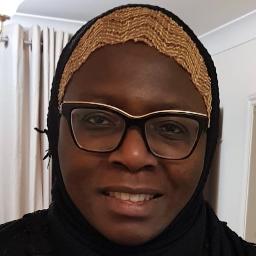
Counsellor · United Kingdom · works online
Khafayah Abdulsalam, BACP, NCPS
Professional body: BACP, NCPS
Counsellor - Trauma and relationship support
About Khafayah
Khafayah Abdulsalam is a counsellor and psychotherapist, an Accredited Member of the British Association for Counselling and Psychotherapy (BACP) and an Accredited Registrant of the National Counselling and Psychotherapy Society (NCPS). She has five years' experience supporting people with stress, anxiety, relationship difficulties, trauma and abuse, grief and depression. Khafayah uses a trauma-informed, integrative approach.
She combines person-centred talking, cognitive behavioural tools and emotional regulation practices. She can also include Islamic counselling principles when clients request spiritual input, such as Qur'anic reflections and du'a.
More about Khafayah's work
Her sessions often involve reflective journaling and practical steps to manage upsetting thoughts and strong feelings. She works with issues that include toxic or spiritually abusive relationships, low self-worth, shame, and cultural or religious identity struggles. She also supports people dealing with burnout, addiction concerns and family problems.
Many clients she mentions are African or Muslim and face pressures linked to culture and faith. Khafayah describes therapy as a place to speak about painful experiences, consider responses, and rebuild a sense of self. She aims to respect clients' beliefs when faith is important to them.
She offers sessions by remote video, phone or messaging and takes part in regular clinical supervision in line with BACP guidance. To begin, users choose the online counselling options button, complete a short matching questionnaire, and schedule a first session.
Professional body
- BACP Registration number 391408
- NCPS Registration numberNCS21-02368
This is the body and number Khafayah gives on their public professional profile, repeated word for word. This directory has not checked it. You can search the BACP register.
Working with Khafayah online
Finding the right approach is part of the work. Khafayah will discuss options with each person and pick methods that fit their needs, goals and preferences. That choice is collaborative and can change as therapy progresses.
Her biography notes that she offers remote sessions by video, phone or messaging, so check the listing to confirm which of these are currently offered. Online sessions can make it easier to fit talking therapy around work, family or other commitments. Phone or messaging sessions can be quicker to join and may suit days when a shorter check-in is needed, while video lets people work face to face without travel. Ask about formats when you complete the matching questionnaire so arrangements suit everyday life.
Sessions are arranged through BetterHelp and take place by video, phone or messaging. What it costs is shown there before you agree to anything.
What Khafayah lists
These are Khafayah's own choices from a fixed list. A listed topic means Khafayah says they work with it; it is not a qualification in it.
- Stress, Anxiety
- Relationship issues
- Trauma and abuse
- Grief
- Depression
- Addictions
- Family conflicts
- Intimacy-related issues
- Eating disorders
- Parenting issues
- Anger management
- Self esteem
- Career difficulties
- Bipolar disorder
- Coping with life changes
- Coaching
- Compassion fatigue
- Abandonment
- Attachment issues
- Autism and Asperger Syndrome
- Avoidant personality
- Blended family issues
- Codependency
- Commitment issues
- Communication problems
- Control issues
- Divorce and separation
- Domestic violence
- Drug and alcohol addiction
- Emptiness
- Family of origin issues
- Family problems
- Forgiveness
- Guilt and shame
- Hospice and end-of-life counselling
- Isolation / loneliness
- Life purpose
- Midlife crisis
- Multicultural concerns
- Narcissism
- Panic disorder and panic attacks
- Post-traumatic stress
- Prejudice and discrimination
- Self-love
- Sexual assault and abuse
- Women's issues
- Workplace issues
Ways of working Khafayah names
- Acceptance and Commitment Therapy (ACT)
- Attachment-Based Therapy
- Client-Centred Therapy
- Cognitive Behavioural Therapy (CBT)
- Emotionally-Focused Therapy (EFT)
- Eye Movement Desensitization and Reprocessing (EMDR)
- Gottman Method
- Mindfulness Therapy
- Solution-Focused Therapy
- Trauma-Focused Therapy
- Internal Family Systems
Naming a way of working is not proof of training in it, and this directory does not see training records. It is a fair thing to ask about.
Questions about Khafayah
What concerns does she support?
She supports stress, anxiety, relationship issues, trauma and abuse, grief, depression, addictions and related concerns listed in her profile.
What style of therapy does she use?
Her work is trauma-informed and integrative, drawing on person-centred talking, Cognitive Behavioural Therapy and emotional regulation tools.
How much experience does she have?
Khafayah has five years' clinical experience working with a range of emotional and relational issues.
Which professional bodies is she with?
She is an Accredited Member of the British Association for Counselling and Psychotherapy (BACP) and an Accredited Registrant of the National Counselling and Psychotherapy Society (NCPS) and is based in the United Kingdom.
In which languages can sessions be held?
Sessions are offered in English and Yoruba.
What session formats are available?
The biography states she offers remote therapy by video, phone or messaging; confirm current options before booking.
How are fees and payments handled?
Cost varies with location and sessions use a subscription that can be cancelled at any time.
How do I start working with her?
Select the See online counselling options button, complete the short matching questionnaire and schedule a first session.
Others who also list Stress & Anxiety
Everyone who lists it
Counsellor - Anxiety and relationships
Also lists: Stress & Anxiety, Relationship, Family

Counsellor - Addictions and Relationships
Also lists: Addictions, Relationship, Self Esteem
Is this your profile? You can ask for a detail to be corrected or for the page to be taken down. You do not need to give a reason.
Contact us